Hydrokinetic powerTurbines for rivers and the sea

Power from
moving water

Melbourne, AustraliaA Starship.com.au company
REC 00:15LOOP

Watch
the idea

Units on bridge pylons and on the river bed, turning at the speed of the water while fish swim past. No dam, no fuel, no battery bank.

AboutAquaFlow

Aqua Flow Energy makes turbines that make low-cost electricity 24/7 from moving water.

The turbines sit below the surface in rivers, tidal channels, ocean currents and large water pipes.

Solar and wind produce power 30% of the time depending on the weather and time of day. A turbine in moving water will supply power around the clock without a battery bank.

Units are 2 to 10 metres across and fit in a shipping container. They are built from stock industrial components with one moving part, and use no rare earth metals.

The First Tranche of US$2 million pays for full-scale prototypes and field trials in Melbourne and the USA. The Second Tranche of US$20 million funds a US factory and licensed partner builds after positive trials.

Sites

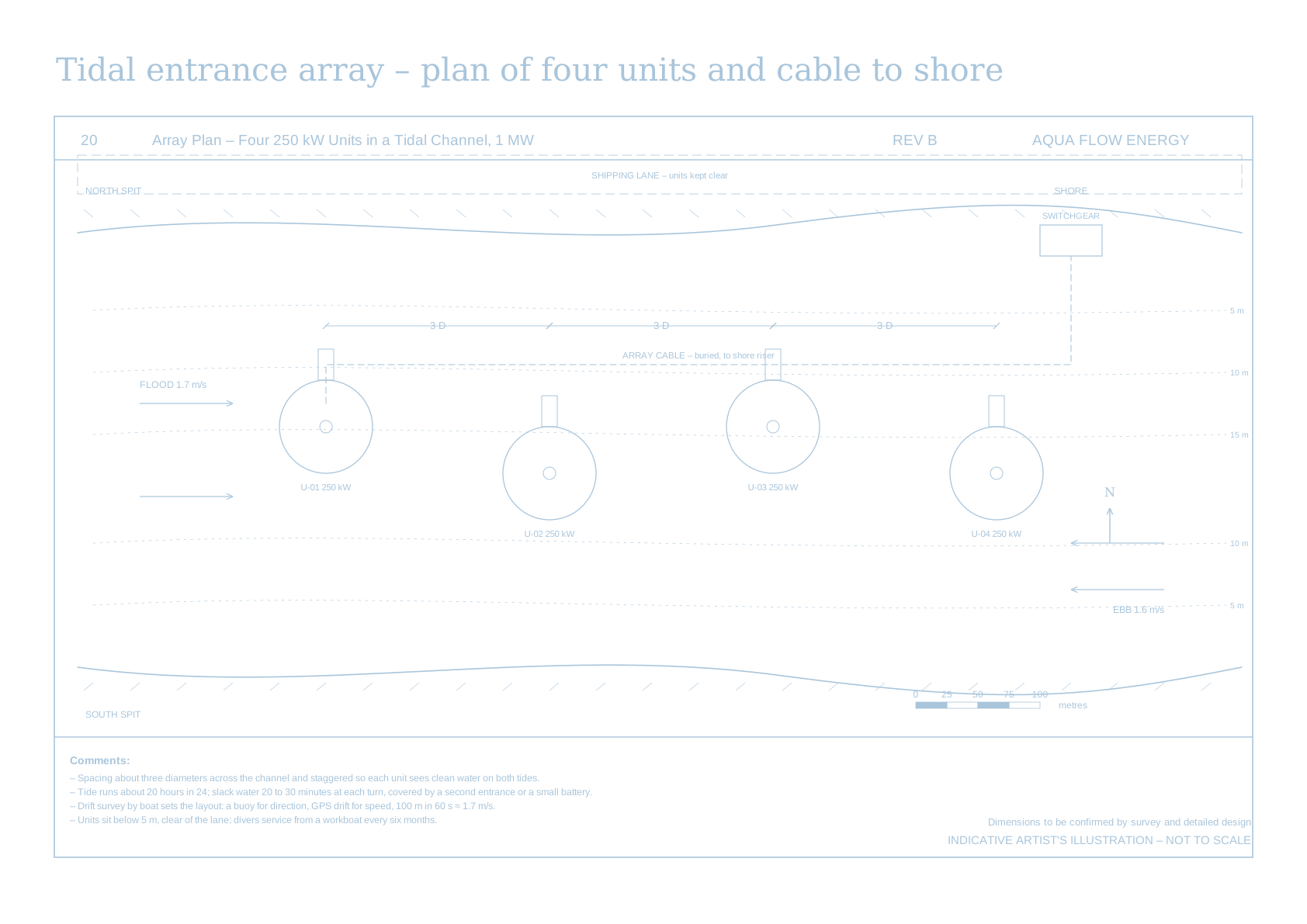
The best sites are where moving water meets existing power lines: a harbour mouth, a bridge in a city river, a wind-farm foundation, an irrigation channel. The panel below is a tidal entrance seen from above, the kind of site a survey boat can measure in an afternoon.

Questions about sites
U-01 · 250 kW U-02 · 250 kW U-03 · 250 kW U-04 · 250 kW CHANNEL · EBB 1.7 m/s
SITE 01 · BAY AND HARBOUR ENTRANCETide runs in and out of a narrow mouth twice a day
SURVEY MODE--:--:--
ARRAY4 × 250 kW · 1.0 MW
SITE 02 · 1.5–3 m/s

Under bridges in city rivers

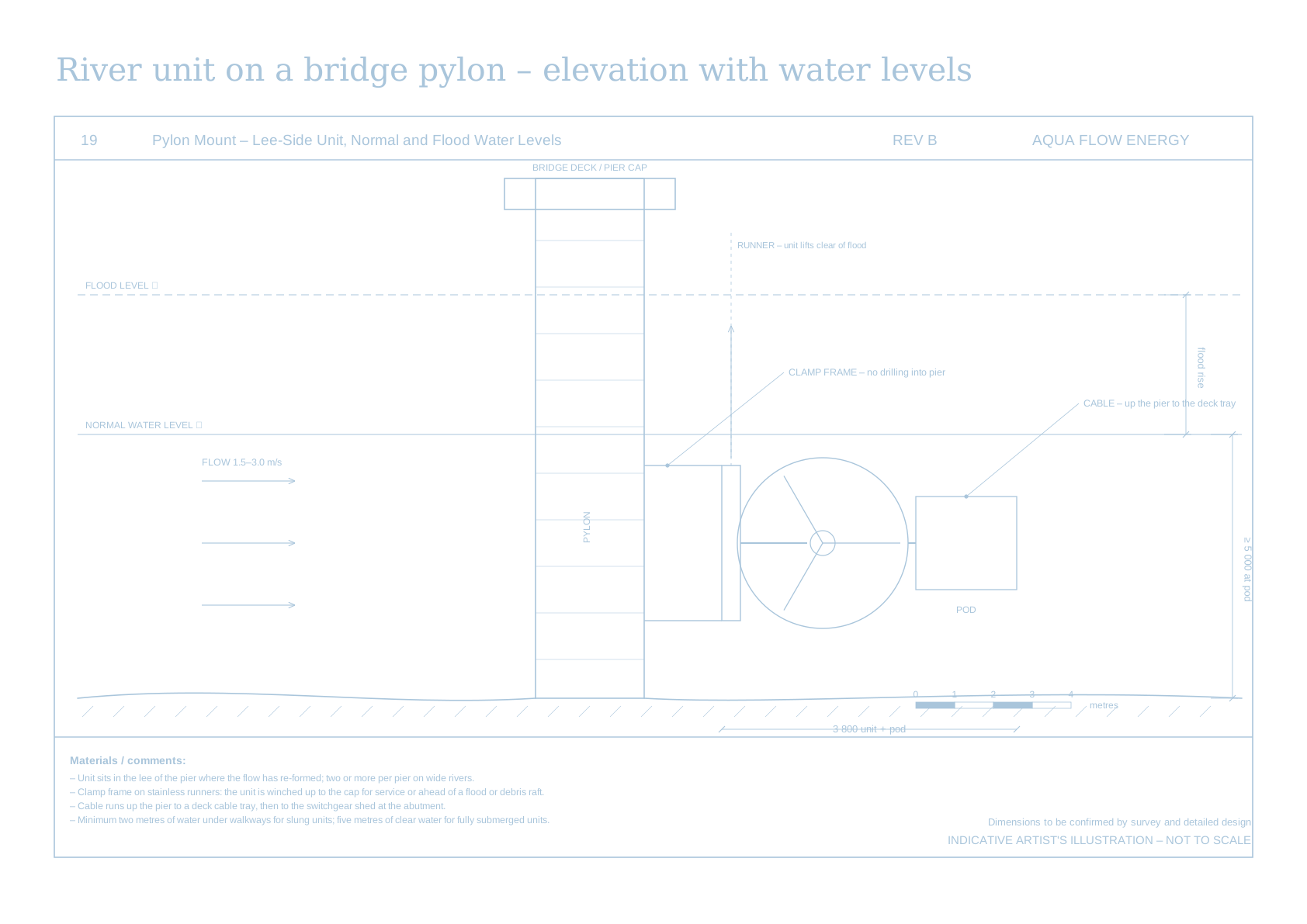
Units hang from bridge pylons and walkways, next to the people using the power.
SITE 03 · 1–2.5 m/s

Ocean currents

Offshore currents flow in one direction all year.
SITE 04 · SHARED GRID

Offshore wind foundations

The towers and grid cables are already in place.
SITE 05 · STEADY FLOW

Irrigation and supply channels

Water in these channels flows at a steady, known rate.

Theunit

BLADE SET 03
Unit sizes and blade types

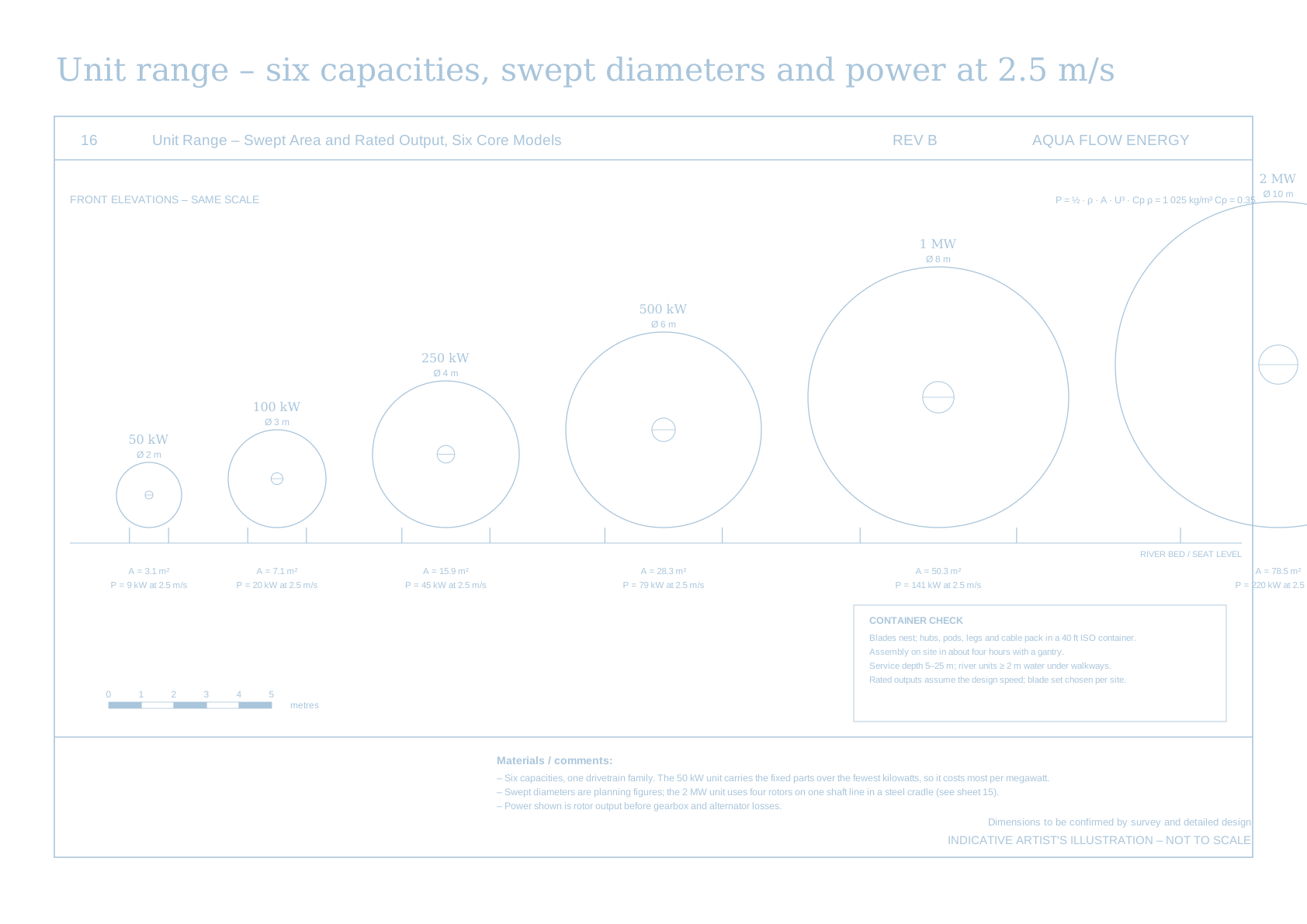
Units run from 2 to 10 metres across. Blade shape is matched to the local water speed, from 0.5 to 5 metres per second.

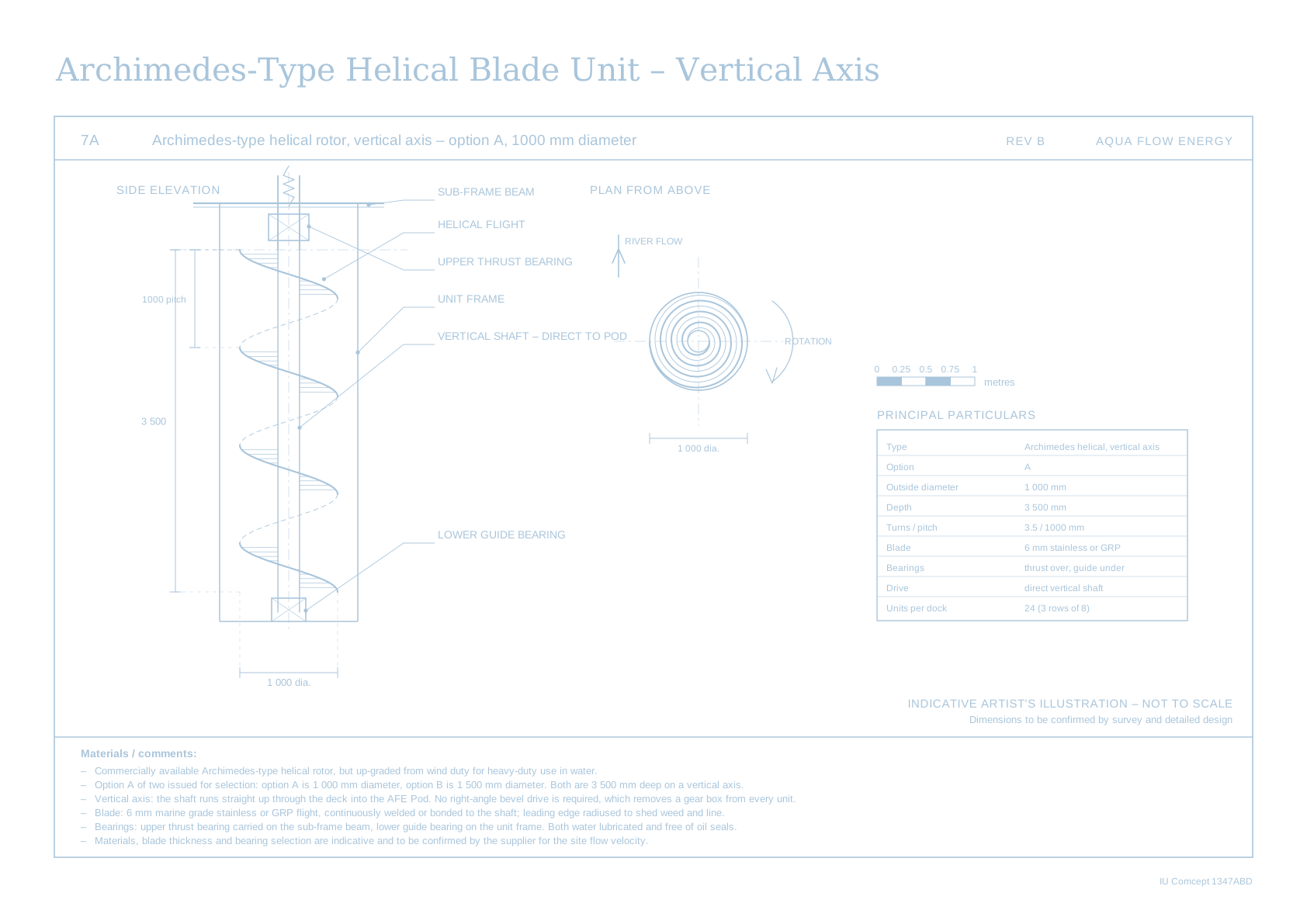
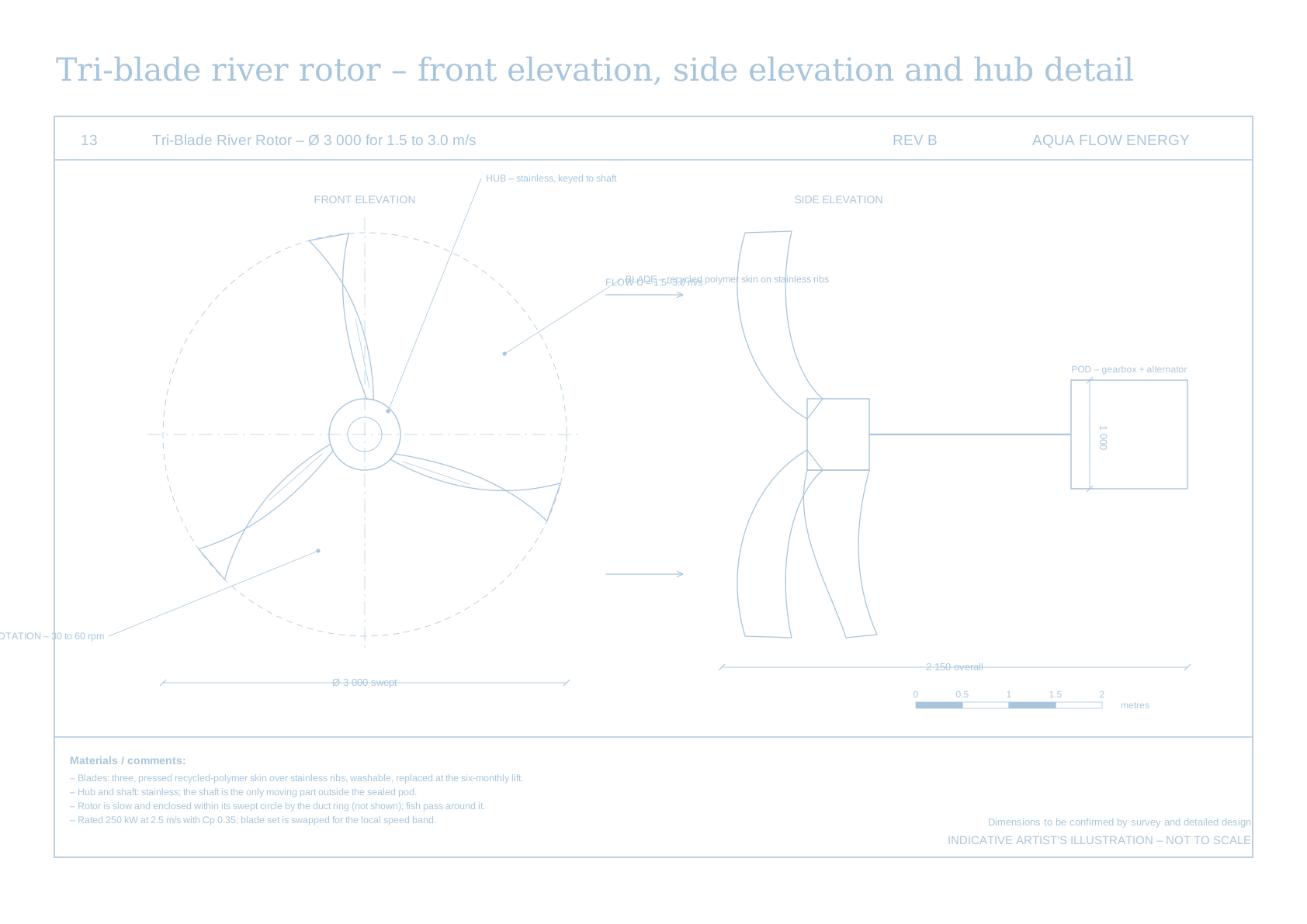
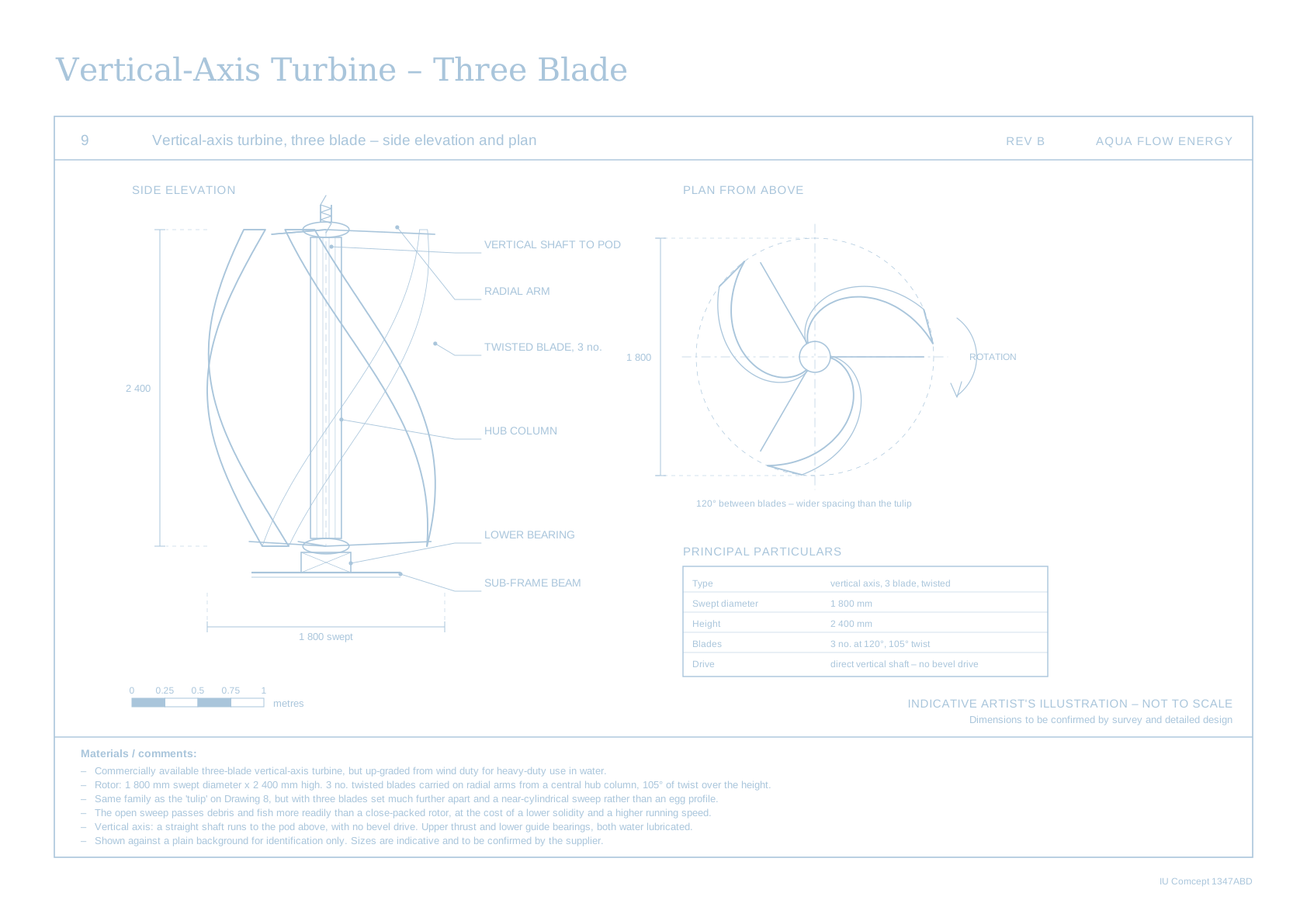
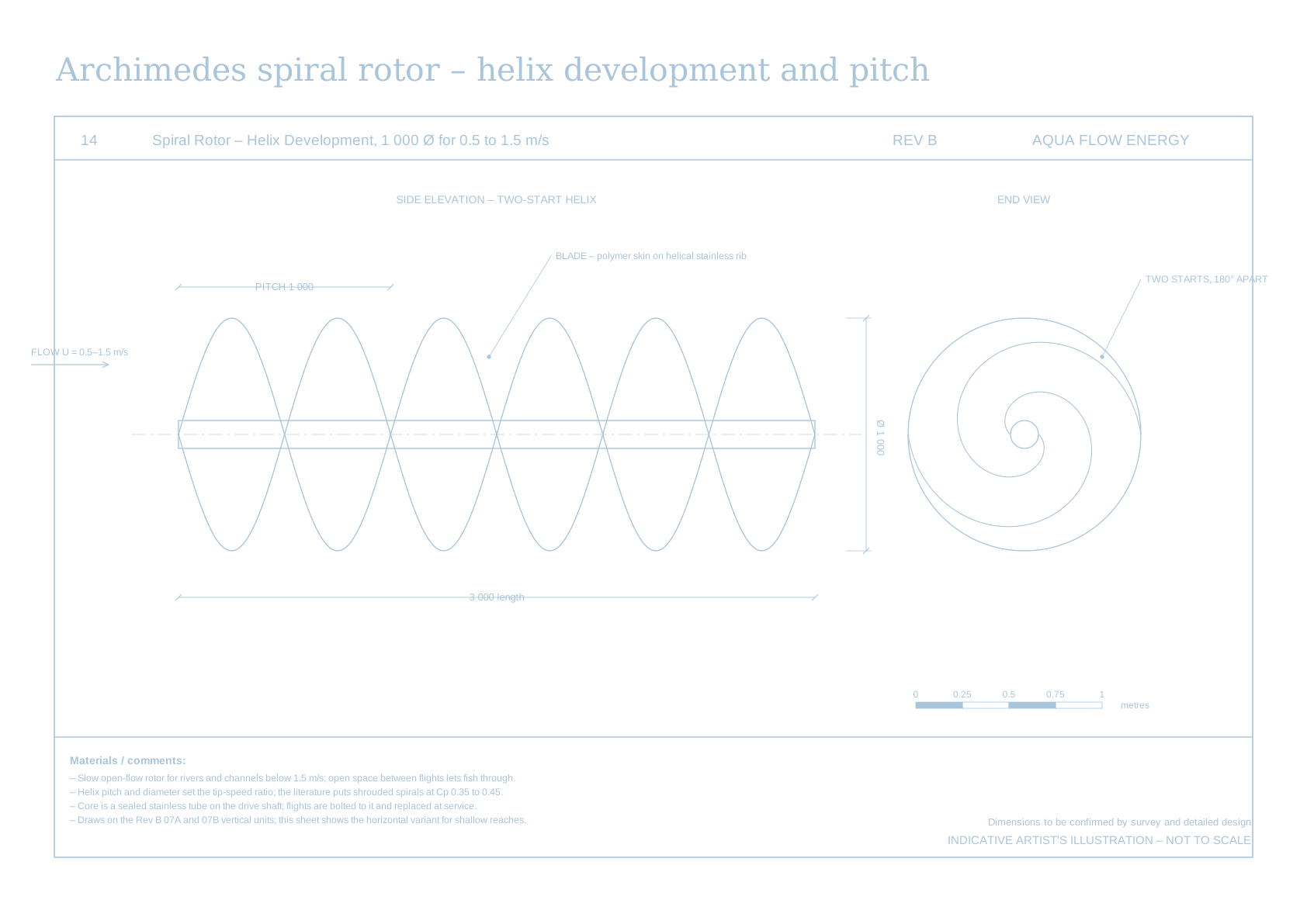
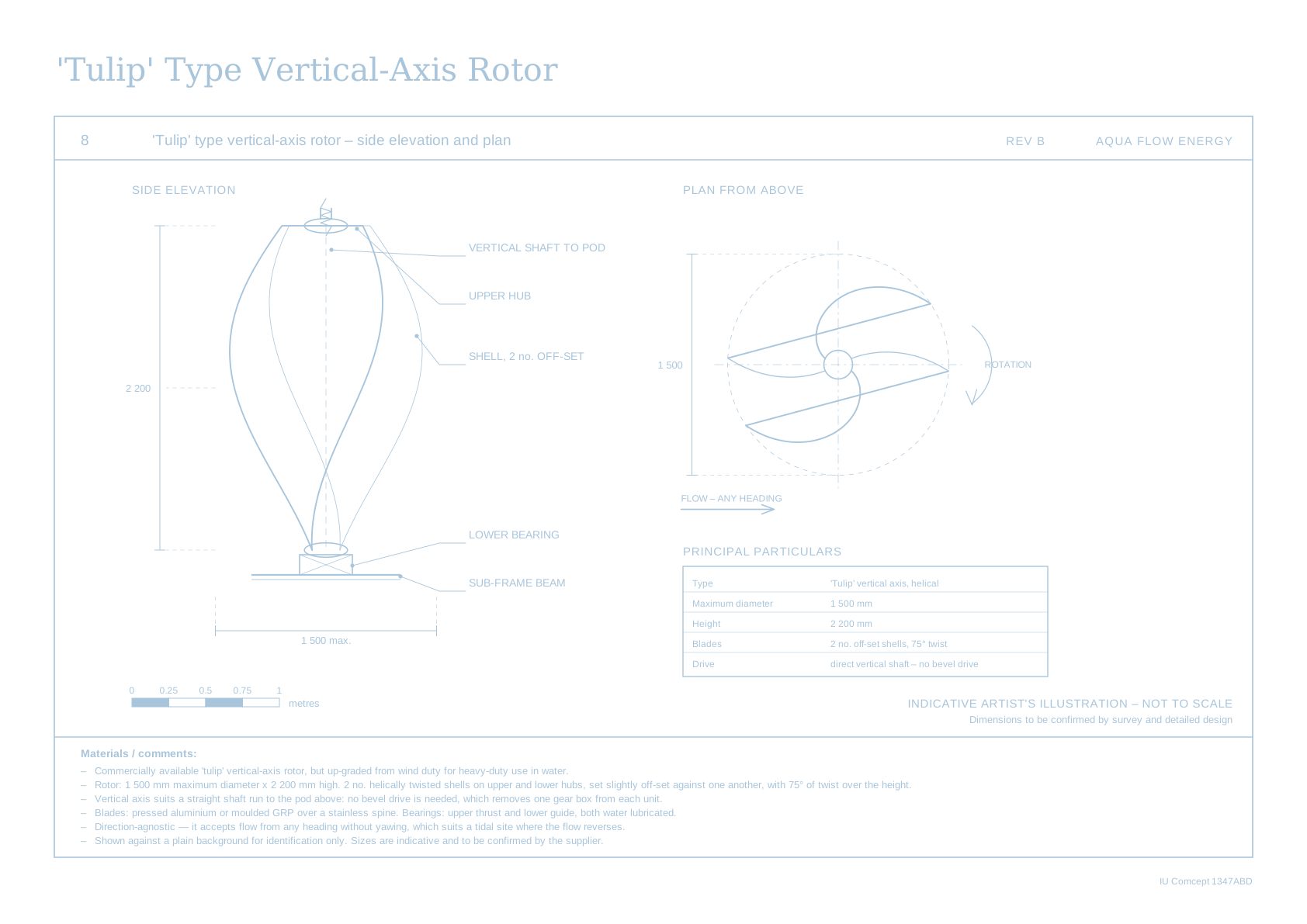
The range includes two and three blade rotors, spiral rotors, and an Archimedes spiral built for slow, open flow. There are six core models in design.

Parts and materials

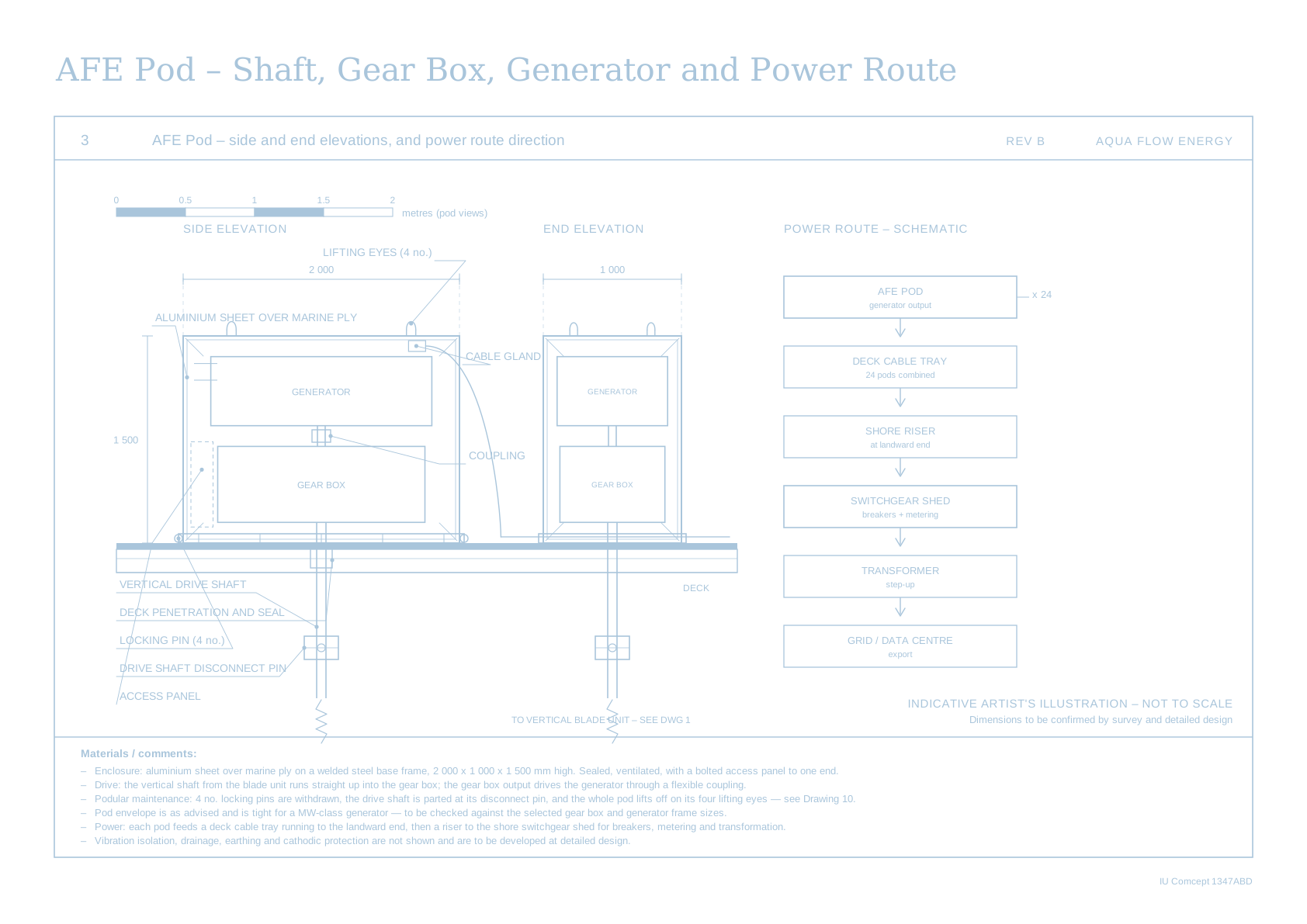
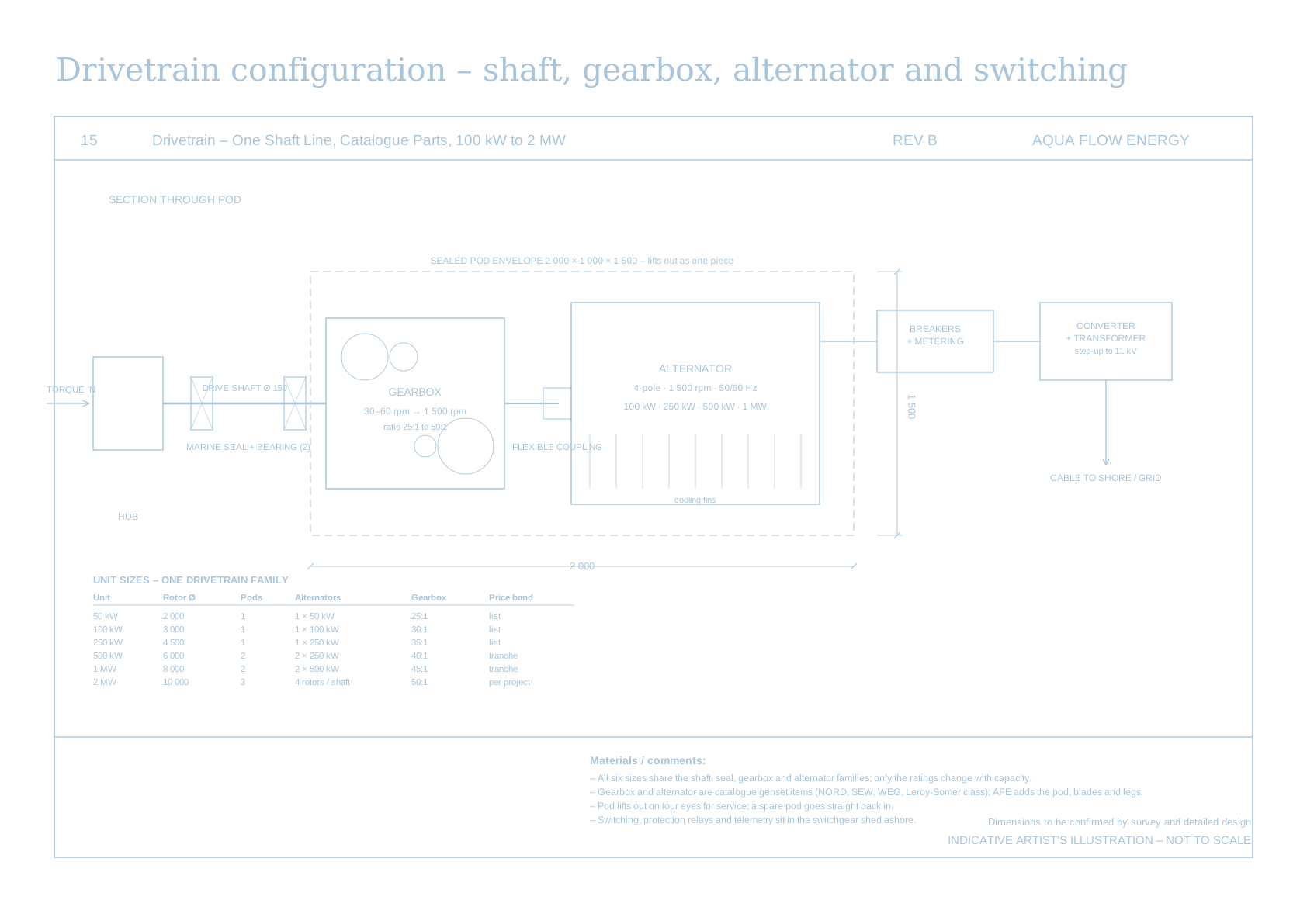
Generators and drivetrains are adapted from proven technology and natural shapes and most parts are bought off the shelf. The shaft is the main moving part, and in some units a gearbox will be used to increase RPM.

Most of the generator unit is iron and copper. The frame is stainless steel and recycled plastic for blades.

Shipping and installation

Units fit standard ISO shipping containers and can be assembled on site in about four hours. No oversize freight permits or heavy-lift ships are needed.

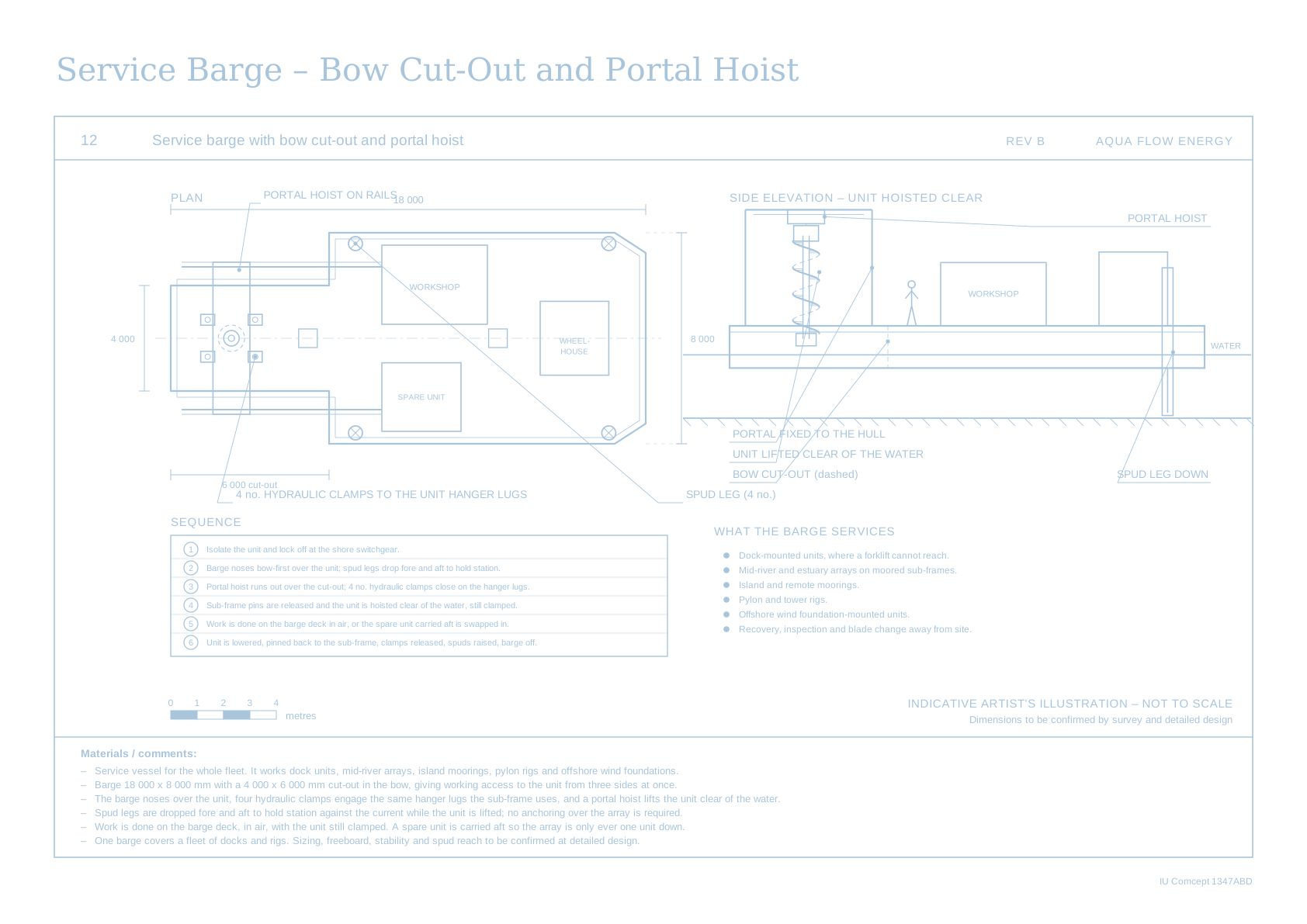
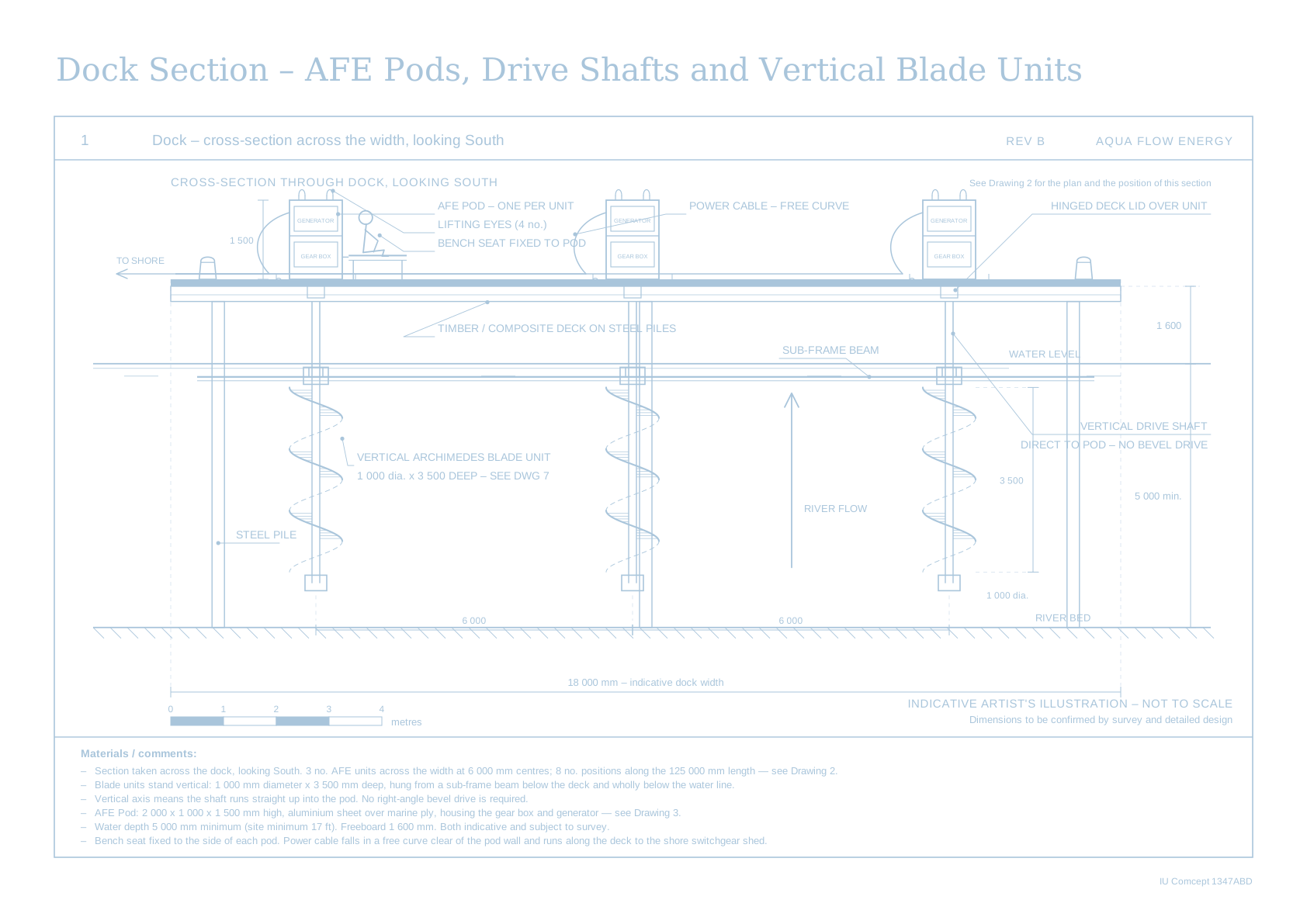
An installation barge carries two or three unit types. The crew measures flow speed and direction at the spot and lowers the unit that suits it.

Servicing

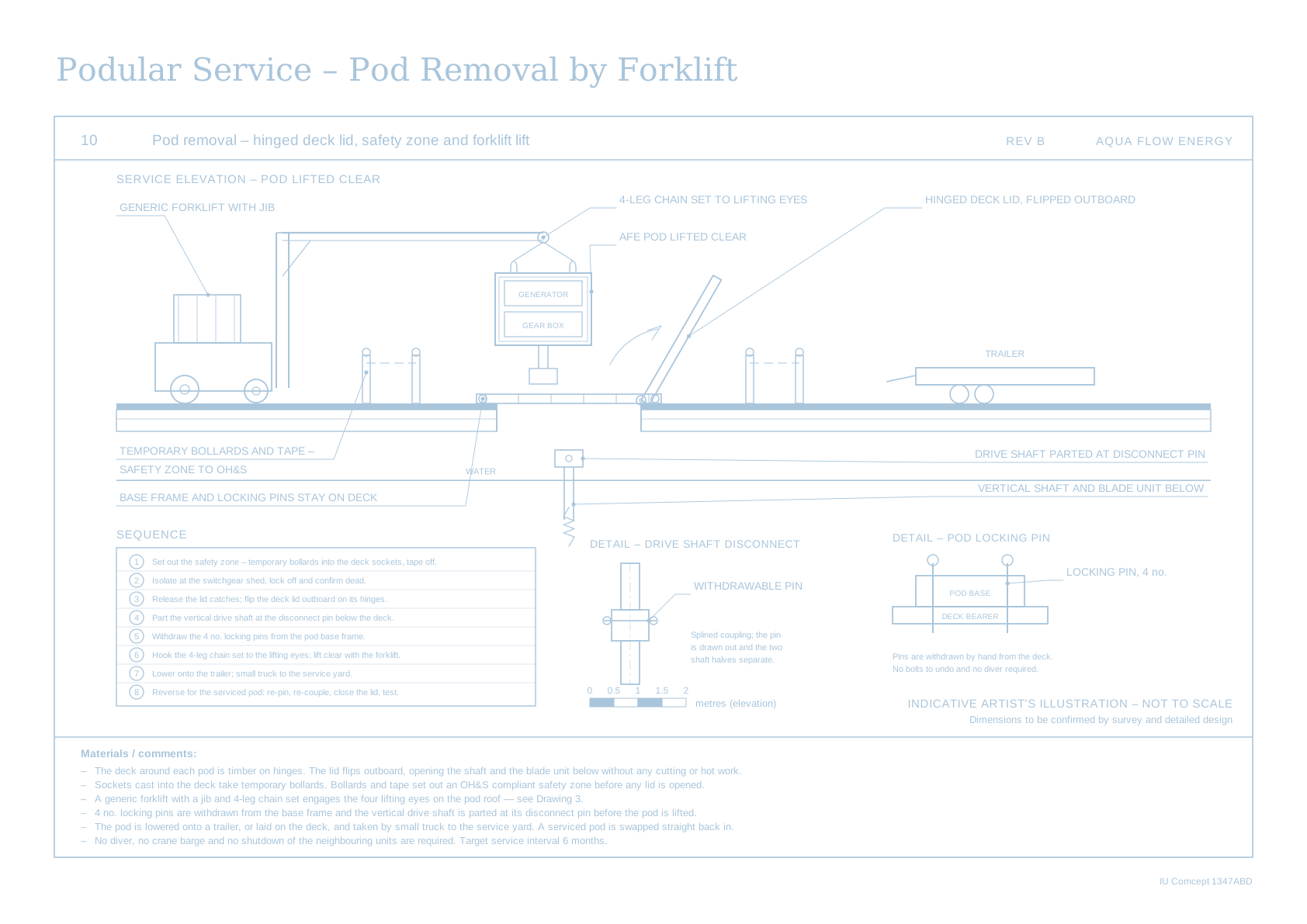
The generator sits in a pod that lifts out. A fresh pod goes in and the old one is serviced on land.

Units work at 5 to 20 metres depth, within reach of divers and a standard workboat. The planned service interval is six months. The rest of an array keeps running while one unit is serviced.

Fish safety

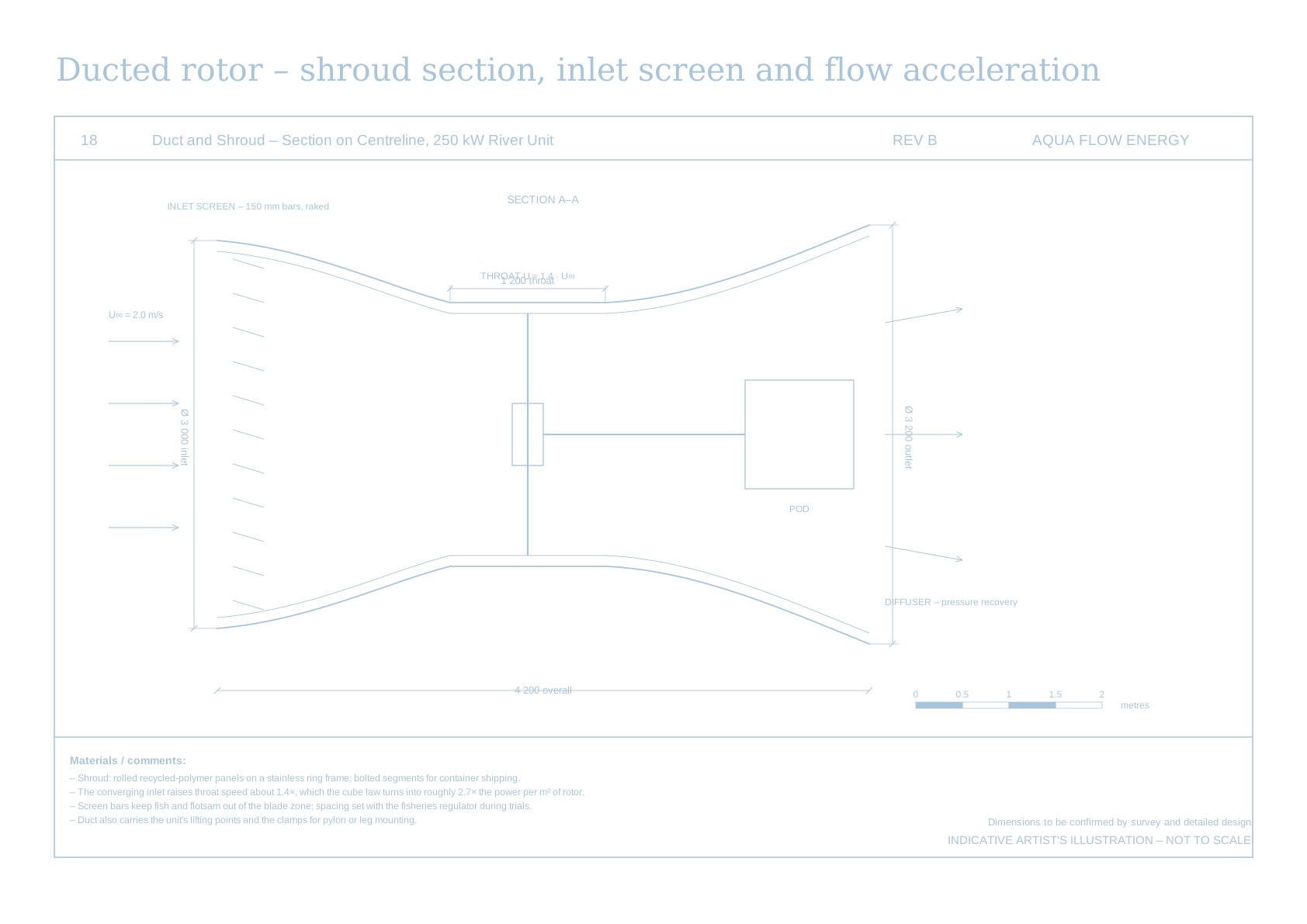
Spiral blades turn slowly and leave open space for fish to pass. Faster units sit behind screens and ducts that keep fish out of the blade zone and smooth the flow into the rotor.

We will measure the effect on fish and marine mammals during field trials.

First
markets

AUTO · HOVER TO PAUSE
01 / 041.5 MW average load per site

Data centres

Data centres need constant power and are often built beside rivers for cooling water. An array in that river supplies power on site. Australia will have more than 300 data centres by the end of 2026. There are over 10,000 worldwide, growing about 20% a year.

Data centre case↗
Phase 1 technical review

01 / 05

What the
engineers
found

Phase 1 technical review, 2026Quoted word for word from the report

Unlike solar or wind, hydrokinetic energy remains stable at night, during storms, and in winter, making it a valuable complement to existing renewable portfolios.
About the review

AetherFab Engineering Australia completed the Phase 1 technical review for AquaFlow Energy.

The quotes above are taken word for word from that report. The financial and performance figures on this site, including build costs, pricing, revenue, EBITDA, production and performance, are AFE’s own and have not been verified by AetherFab Engineering Australia.

Unit
economics

Build cost

Planning cost of a 1 MW unit: the bill of materials doubled. Catalogue alternators and gearboxes, a steel pod, pressed blades on stainless ribs, legs and cable to shore.

Planning cost
US$1.21M
per megawatt, 1 MW unit
Compared with
  • UK tidal arrays at £4.9–9.4M per MW (2023 government review)
  • A new 1 MW diesel genset at US$385k–825k, then about US$3M a year in fuel
Source ↗

Sale price

Units are sold outright for the first three years. Data centres and cities pay a price per megawatt that steps down as the megawatts accumulate.

First 50 MW
US$5.0M
per megawatt, 500 kW and 1 MW units
Then
  • US$4.5M, US$4.0M, and US$3.5M per MW after 200 MW
  • Small units at list: 50 kW US$350–400k, 100 kW US$450–500k, 250 kW US$800k, half or less of ten years of diesel
Source ↗

Power price

From the fourth year a customer can lease instead of buy. Power is priced under the buyer's next cheapest firm option, fixed for ten years and indexed.

Cities and data centres
US$100
per megawatt hour
Compared with
  • On-site gas engines at about US$107 per MWh (June 2026)
  • Islands pay US$150 against diesel power at about US$300
  • Tidal and wave power today at US$200–850 per MWh (IRENA)
Source ↗

Deposits and service

Every unit sold carries a deposit on order and a service agreement. Deposits on next year's orders pay for this year's components.

Deposit on order
25%
balance on delivery
Service
  • US$12,000 to US$100,000 a unit a year by size: the six-monthly lift, skins, spares and monitoring
  • Margin on the bill of materials of 39–72% for the small units at list
Source ↗

Figures are from the AFE business plan, November 2026. Planning costs are the bill of materials doubled; prices are the plan's tranche prices. Prototype and field trials will test them. These figures are AFE’s own and have not been verified by AetherFab Engineering Australia.

Bottom line

What the plan models

Three cases from the November 2026 business plan, five years from Tranche A. Units are sold outright for the first three years, leased from the fourth. No outside money after the two tranches in any case.

Revenue, year 3US$1,072MThe first 50 MW order is the anchor
Revenue, year 5US$2,130MUnit sales, batteries, leases, service, licences
EBITDA, year 5US$1,003MBefore interest, tax and depreciation
Cash in hand, end of year 5US$1,179MPeak funding need US$3.5M, inside year one

Base case: 1,320 MW installed by the fifth year, with 200 MW delivered in year three. Data-centre and city units sell at US$5.0M per MW for the first 50 MW, falling to US$3.5M. These are projections from the plan's model, not forecasts, and the trials will change them.

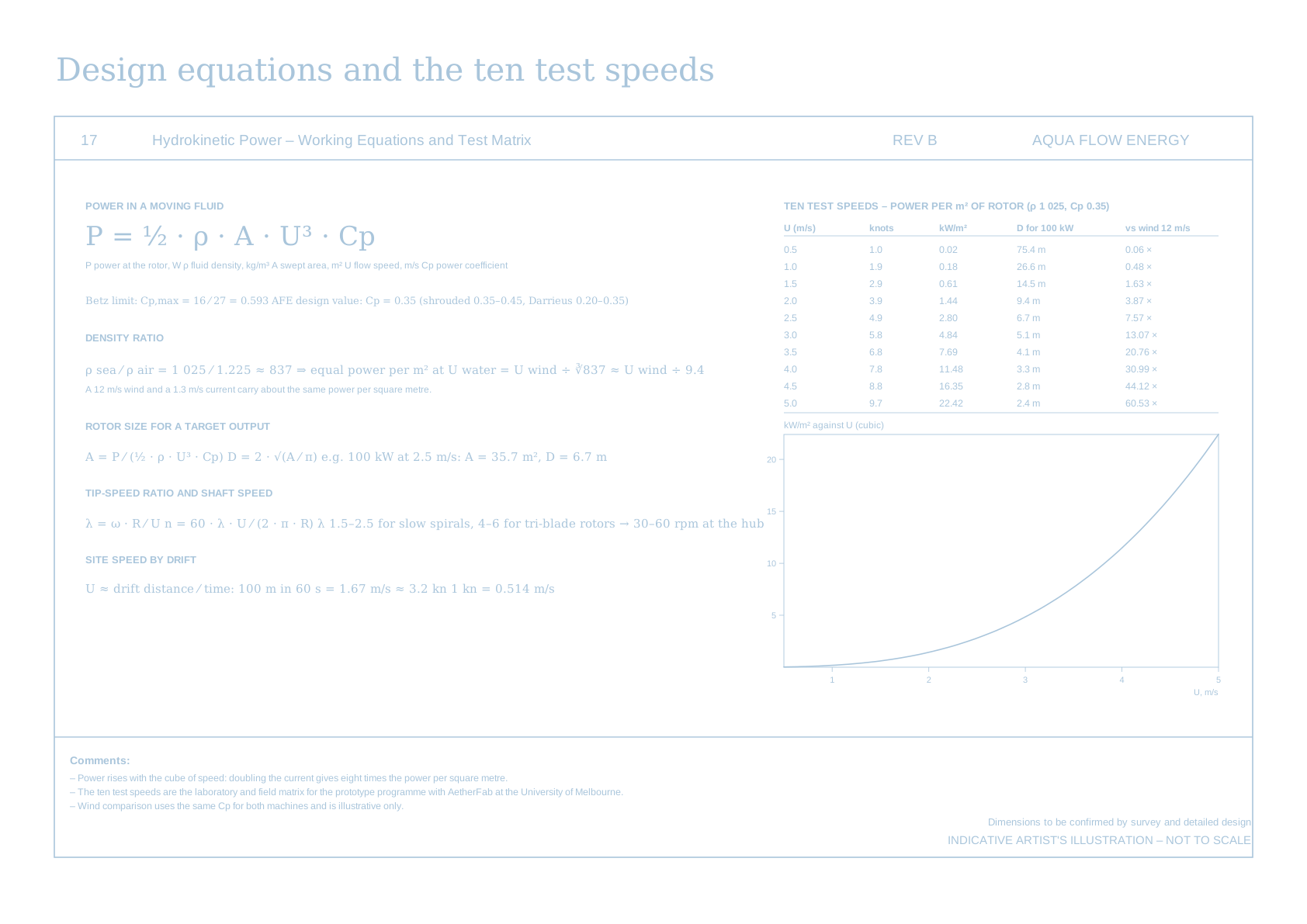
⚡ U 2.5ρ 1,025

Key
numbers

[ 001 ]800×

Denser than air

Water carries far more energy per square metre than wind at the same speed, so the units can be much smaller.

[ 002 ]20/24

Hours of flow at a tidal site

Tide pauses briefly each time it turns. Units at several points along a coast cover each other's pauses.

[ 003 ]4 h

To assemble on site

Each unit arrives in a standard shipping container and is put together where it will run.

[ 004 ]6 mo

Between services

The generator pod is swapped and the old one is serviced on land.

Roadmap

Done
01 · 2015–2025

Concept and models

Ten years of design work produced 3D-printed concepts, small prototypes and six core blade designs, each matched to a band of water speeds.

Complete
02 · 2026

Phase 1 technical review

AetherFab Engineering Australia completed the Phase 1 technical review for AquaFlow Energy.

Complete
Where we are up to
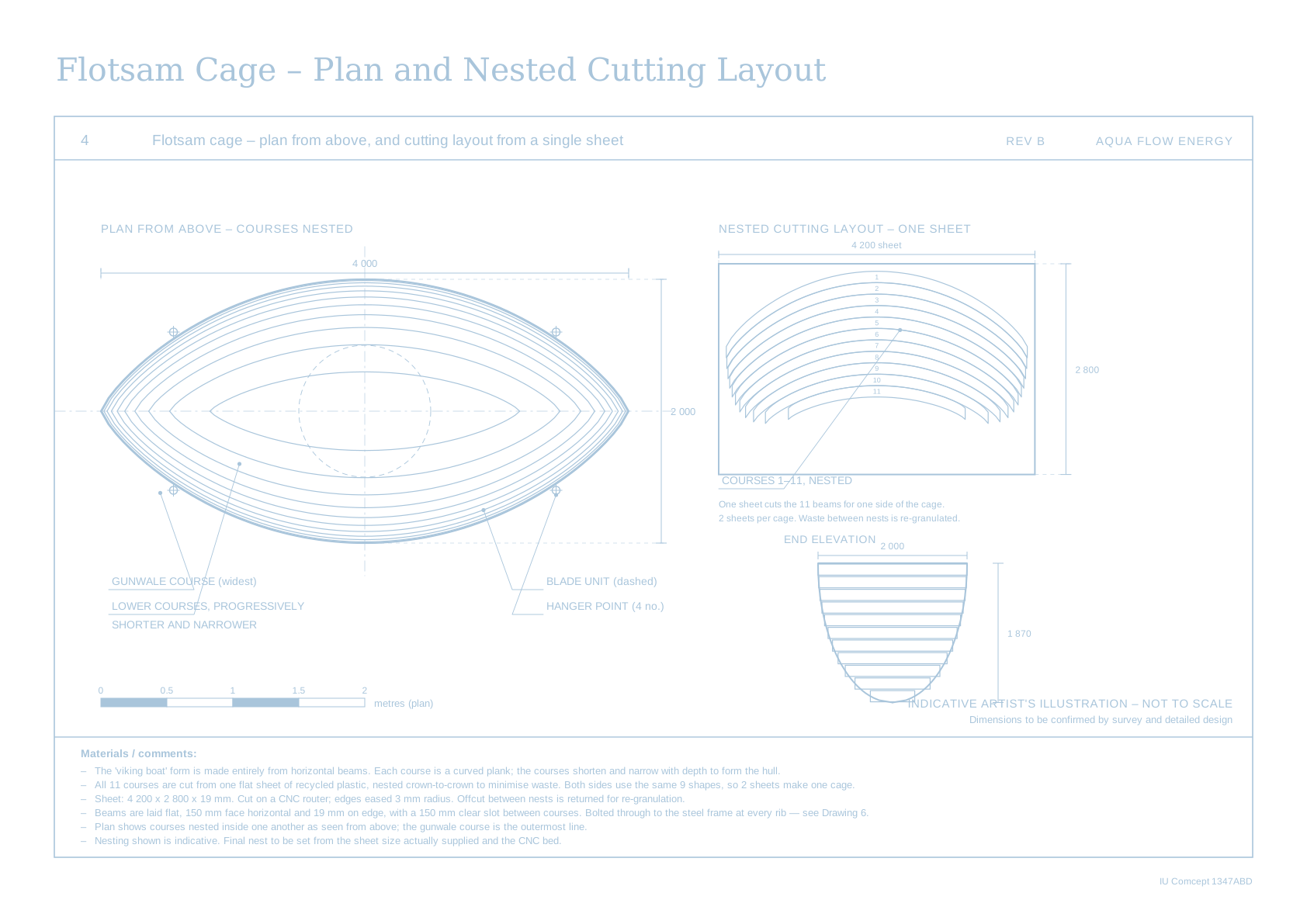
Tulip rotor drawing, Rev BDWG 08 · TULIP ROTOR · REV B
03This round

Prototypes and lab tests

Full-scale prototypes, tested in a fluid engineering laboratory. Tests cover torque and vortex effects in flood flows.

Service barge drawing, Rev BDWG 12 · SERVICE BARGE · REV B
04This round

Field trials

Quarter-scale and full-scale units in the Yarra River and in tidal water such as Mud Island in Port Phillip Bay. The trials measure power per unit and the effect on fish.

Pod removal by forklift drawing, Rev BDWG 10 · POD REMOVAL · REV B
05After trials

Licensed manufacture

Assembly and maintenance partners signed in each region, starting with the first US plant. The target is 18 months from the end of trials to international distribution.

Why we are doing this

Clean power that is practical, efficient and profitable. The river runs whether or not the sun shines, and every unit we put in it is cash and evidence at once.

Practical

Stock parts, a shipping container and a workboat. No dam, no new transmission line, no rare earths.

Efficient

Water is 800 times denser than air. A small rotor in a steady current does the work of a large one in the wind.

Profitable

Units are sold with a service contract from day one. The plan returns investors' cash by around the thirty-sixth month in the Base case.

Board and
contacts

B.Bus, CPM, FAMI, GAICDGB
Geoff BowllFounder and chief executive

Geoff has run the Melbourne agency Starship since 1991 and leads partner and licensing deals. The core designs come from his experiments in water flow since 2010.

MAICDWM
Wes McKnightHead of manufacturing

Wes has thirty years in the electrical industry and a decade working in the United States. He will establish and run the first US plant.

LLB, BA, GAICDBG
Ben GreenLegal and corporate structuring

Ben is special counsel at Nevett Wilkinson Frawley and mayor of Central Goldfields Shire. He handles structures, regulation and talks with governments.

B.Ag.SciLB
Luca BrewDigital, media and environment

Luca runs AFE's brand, web and systems, and fronts its work on water, ecology and biodiversity. He consults on water remediation and ecological restoration.

InvestorsGF
Gerard FarleyCapital and corporate finance, Empire Securities Group

Gerard is the first contact for sophisticated and wholesale investors. Thirty years in international finance in New York, Asia and Australia.

All directors are sailors and divers. Systems and telemetry by Mark Treleaven, 1ZERO.

⚡ US$2M + US$20MSTAGE 03–04

Investing
in AFE

U 0.5–5 m/sØ 2–10 mDEPTH 5–20 m

US$2 million moves AFE from design to commercial manufacture. It pays for full-scale prototypes and field trials in Melbourne and the United States.

The Second Tranche of US$20 million, on positive results, funds the first US plant, long-lead components for the first units and operations to first revenue. No further dilution is expected: the business is funded by 25% deposits on orders from then on.

01
Information memorandumThe full plan, the model and the offer. Released after an NDA is signed.
02
Due diligence packTechnical drawings Rev B and the market decks.
03
A conversationGeoff or Gerard will walk you through the numbers and the test programme.

For sophisticated and wholesale investors. Early-stage technology investment carries high risk. You could lose all of the money you invest.

Investor enquiry

SECURE
I would like
We reply within two business days. The NDA comes with the first reply.

We use your details only to reply. See our privacy notice.